

Learning to tell the difference — and find peace in both.
We All Feel Stressed—But Is It Something More?
Everyone feels stress from time to time. Maybe you’re rushing to a meeting, facing a major deadline, or trying to manage family life. In those moments, your body reacts — your heart beats faster, you breathe quicker, and your focus narrows. That’s stress: your built-in alert system keeping you sharp when life demands it.
But sometimes, that tension lingers long after the stressful moment ends. Your mind keeps racing, your body can’t fully relax, and worry feels constant. That’s when normal stress may shift into anxiety. Recognizing that line matters because while both feelings come from the same biological system, they affect your body, mind, and spirit in very different ways. At Harvest Counseling and Wellness, children, teens, adults, couples, and families are supported in understanding and overcoming these emotional responses through holistic, compassionate care.
Understanding Normal Stress: The Body’s Way of Protecting You
Stress, when short-term, is a normal and even helpful part of life. It’s what pushes you to study for an exam, prepare for a presentation, or react quickly in an emergency. It’s your body’s natural “fight-or-flight” response — a burst of physical and mental energy designed to help you respond to pressure.
When the stressor passes, your system calms down, and your body returns to its balanced state. This type of stress:
Has a clear cause and an end point.
Can energize or motivate you to take action.
Fades once the situation resolves.
However, when stress becomes chronic — lasting for weeks or months — the body stays on high alert. You may feel exhausted, irritable, or overwhelmed. Chronic stress often becomes the ground where anxiety develops if left unaddressed.
Recognizing Anxiety: When Worry Doesn’t Turn Off
Anxiety often begins like stress, but instead of easing when circumstances improve, it keeps echoing in your mind. It’s the difference between momentary pressure and an ongoing sense of fear or “what if” thinking that doesn’t stop.
Anxiety is the body’s protective system stuck in “on” mode — even when no real danger is present. People experiencing anxiety often describe feeling trapped, restless, or constantly preoccupied. Common signs of anxiety include:
Persistent, excessive worry about everyday things.
Racing or intrusive thoughts.
Restlessness, irritability, or muscle tension.
Trouble sleeping or concentrating.
Avoiding social situations or decisions out of fear.
Anxiety does not mean weakness or a lack of faith. It is a mind–body response that signals something in the system needs care, regulation, and often healing from deeper experiences like past trauma, chronic stress, or loss.
Key Differences Between Stress and Anxiety
Stress and anxiety are related, but knowing their differences helps you respond in healthier, more compassionate ways.
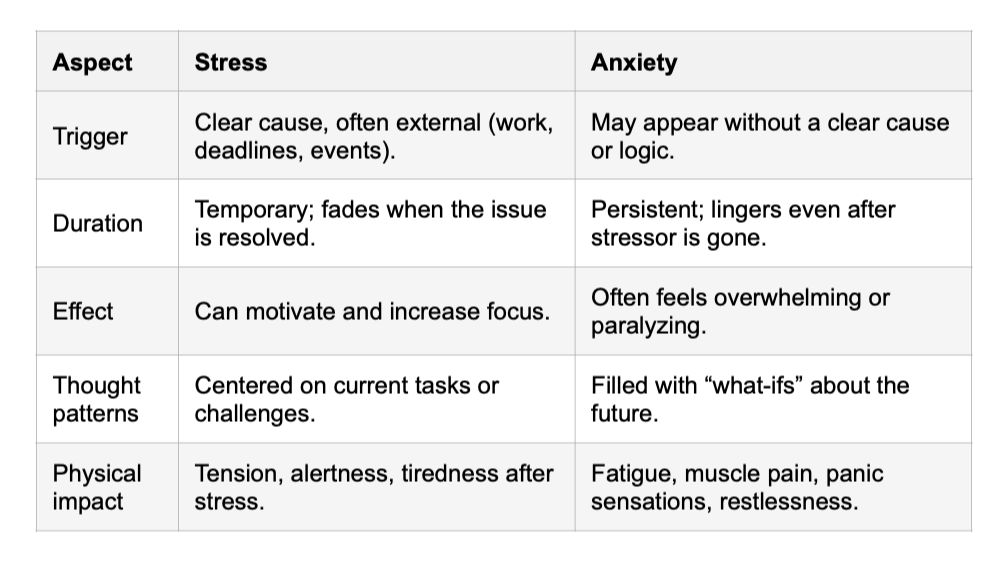
For example, running late for work might trigger stress — once you arrive, you calm down. If you spend the rest of the day worrying about being late again, replaying the moment, or lying awake at night thinking about it, that’s anxiety taking hold.
Understanding which one you’re experiencing can guide your next step — whether it’s taking a few deep breaths to reset or reaching out for deeper support if worry keeps spiraling.
When to Seek Support
Everyone experiences stress and occasional anxiety. However, if anxiety begins to shape your everyday life, it may be time to reach out for support.
You may benefit from professional help if:
Anxiety or worry feels constant or difficult to control.
You avoid situations, relationships, or responsibilities because of fear.
Sleep or appetite changes persist for weeks.
You struggle to “turn your brain off,” even when you try to relax.
You experience panic symptoms like shortness of breath, chest tightness, or dizziness.
At Harvest Counseling and Wellness, support for anxiety and chronic stress may include talk therapy, Christian counseling, psychiatric care when appropriate, nutrition counseling, and neurofeedback. Neurofeedback is offered as a gentle, noninvasive option that helps the brain practice calmer, more regulated patterns over time, which can be especially helpful when your nervous system feels “stuck” in fight-or-flight.
Professional counseling can help you:
Identify patterns that are fueling anxiety and chronic stress.
Learn grounding and relaxation techniques to regulate your nervous system.
Reprocess trauma that may underlie worry or fear.
Build lasting emotional resilience and a healthier sense of self.
Reaching out before things feel unbearable often leads to more effective and sustainable healing.
Ways to Manage Everyday Stress
While therapy, neurofeedback, and other professional supports can create deep and lasting change, there are also daily habits that can help you manage normal stress before it hardens into chronic anxiety.
Practice mindful breathing
Slow, deep breathing activates the body’s relaxation response. Breathing in through the nose for several counts and exhaling longer through the mouth can reduce muscle tension and lower your heart rate.Establish healthy boundaries
Saying yes to everything eventually empties your emotional and physical reserves. Setting boundaries around your time, energy, and commitments protects your wellbeing and reduces stress overload.Move your body regularly
Movement releases endorphins and supports better sleep and mood, which in turn improves your ability to handle everyday stress. Even a brief walk or stretch break can make a noticeable difference.Nourish your body and mind
What and when you eat influences how your body tolerates stress. Balanced nutrition and consistent meals help stabilize blood sugar, which supports steadier moods and energy, and can be complemented by nutrition counseling when needed.Ground yourself spiritually
For many people, prayer, Scripture, and faith-based reflection bring perspective and comfort in stressful seasons. Turning worries into prayers can soften anxiety and remind you that you are not alone in what you carry.Prioritize rest
Sleep gives both body and brain a chance to repair and reset, and chronic sleep deprivation can worsen both stress and anxiety. Creating a calming bedtime routine and limiting screens before bed can support more restorative sleep.Stay connected
Healthy relationships are one of the strongest buffers against stress. Sharing your struggles with trusted friends, family, a pastor, or a counselor reduces isolation and often makes stress feel more manageable.
A Faith-Based Perspective: Finding Peace Amid Uncertainty
From a Christian perspective, stress and anxiety are not proof of spiritual failure; they are reminders of human limits and the need for grace. When life feels uncertain, the instinct is often to grip harder for control, but anxiety tends to grow stronger in that tight grip.
Faith invites a different response: surrendering control, not as giving up, but as trusting more. Practices like prayer, worship, and meditating on Scripture help shift the inner narrative from “It’s all on me” to “I am held, even here,” which can soften anxious thoughts and support emotional regulation.
In a counseling setting that honors faith, spiritual resources can be integrated alongside evidence-based tools to address anxiety and stress at every level — mind, body, and spirit.
Children, Teens, and Families: Recognizing Early Signs
Anxiety affects people of all ages, but the signs can look very different in children, teens, and adults. Children may show stomachaches, clinginess, irritability, or new sleep problems without a clear medical cause. Teens might become more withdrawn, perfectionistic, or easily overwhelmed by school and social pressures. Adults often experience anxiety as chronic busyness, irritability, distracting worry, or feeling constantly “on edge.”
Recognizing these patterns early makes it easier to intervene before anxiety becomes a long-standing way of coping. At Harvest Counseling and Wellness, services like play therapy, teen counseling, family counseling, nutrition counseling, and neurofeedback are available to support kids, teens, and parents in building healthier emotional and relational patterns together.
Encouragement and Next Steps
If you recognize yourself or someone you love in these descriptions of anxiety and stress, take a moment to notice that awareness. Naming what is happening — “this might be more than stress” — is already a meaningful step toward healing.
Stress and anxiety are not enemies to destroy; they are signals that something in your life, body, or story needs care and attention. With the right support, those signals can become invitations to healthier rhythms, deeper healing, and a more grounded sense of peace.
The team at Harvest Counseling and Wellness offers individualized care, including counseling, Christian counseling, neurofeedback, nutrition support, and more for those navigating stress, anxiety, trauma, or life transitions in Argyle and the greater North DFW area. Reaching out for help is not a sign of failure; it is a courageous step toward the life and relationships you were created for.