

Eating disorders silently affect millions of Americans, striking across all ages, genders, and body types with devastating consequences. These shocking statistics reveal the scale of the crisis and why early intervention is critical—especially through specialized support like Harvest Counseling and Wellness in Argyle, Texas.
A Hidden Epidemic: 9% Lifetime Prevalence
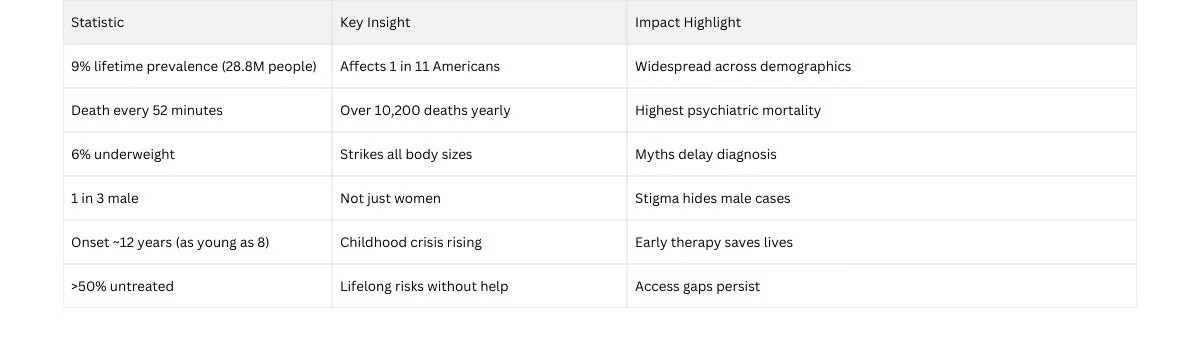
Roughly 9% of the U.S. population—about 28.8 to 30 million people—will experience an eating disorder in their lifetime. This translates to nearly 1 in 11 Americans grappling with conditions like anorexia, bulimia, or binge-eating disorder at some point. The sheer numbers highlight how eating disorders are far more common than most realize, infiltrating families, schools, and workplaces nationwide.
Deadly Toll: A Death Every 52 Minutes
Every 52 minutes, one person dies as a direct result of an eating disorder, leading to over 10,200 deaths annually. These disorders claim the second-highest mortality rate among all mental illnesses, often through heart failure, organ damage, or suicide. This relentless pace equals a tragedy unfolding hourly, underscoring the urgent need for awareness and access to care.
Beyond the Stereotype: Only 6% Are Underweight
Only 6% of people with eating disorders are medically classified as “underweight,” proving these illnesses impact individuals of all body sizes. Binge-eating disorder, the most prevalent form, often affects those at higher weights, while orthorexia or ARFID (Avoidant/Restrictive Food Intake Disorder) can manifest without visible changes. This myth-busting fact challenges outdated images of "emaciated teens" and calls for broader screening.
Men Are Affected Too: 1 in 3 Cases
One in 3 people with an eating disorder is male, shattering the notion that these are "women's issues." Lifetime prevalence stands at about 4.07% for males versus 8.6% for females, with men facing unique barriers like stigma and misdiagnosis. Rising cases among male athletes and those pursuing muscular ideals demand gender-inclusive treatment approaches.
Alarming Early Onset: Starting at Age 12 (or Younger)
The average age of onset is around 12 years old, with rates climbing even in children as young as 8. Social media, body image pressures, and family dynamics fuel this trend, turning playgrounds into battlegrounds for distorted self-perception. Early detection in kids can prevent decades of suffering, making child-focused therapies like play therapy essential.
The Treatment Crisis: Over Half Go Untreated
Over half of those who struggle with an eating disorder never receive treatment, facing lifelong health repercussions. Barriers include shame, lack of awareness, and limited providers—only 27% of affected women seek care by their 40s or 50s. Without intervention, risks of chronic illness, infertility, and mental health comorbidities skyrocket.
Key Statistics at a Glance
Take Action: Recovery Is Possible
These statistics paint a sobering picture, but hope lies in specialized care like trauma-informed therapy, nutrition counseling, and eating disorder support. At Harvest Counseling and Wellness, we help individuals, teens, adults, couples, and families in Argyle, Denton, Flower Mound, Roanoke, Southlake, and Northlake.
Ready to start healing? Schedule a free consultation today at harvestcounselingandwellness.com or call us.