
Watching your child struggle with anxiety, depression, trauma, behavioral challenges, low self-esteem, or difficult life circumstances can leave you feeling helpless. As a parent, you want to fix the problem, protect them from pain, and see them happy again.
The truth is that healing takes time, and there isn't a quick solution. Counseling can provide your child with a safe place to process emotions, learn healthy coping skills, and build resilience, but what happens outside the therapy office is just as important.
Parents have a tremendous opportunity to support their child's growth by creating an environment that encourages emotional, physical, relational, and spiritual well-being. Small, consistent actions at home often make a significant difference over time.
Ways You Can Support Your Child's Healing
Learn Alongside Your Child
Take time to understand what your child is experiencing. Read books, articles, or listen to podcasts recommended by your child's therapist. The more you understand, the more confidently you can support them.
Encourage Healthy Emotional Expression
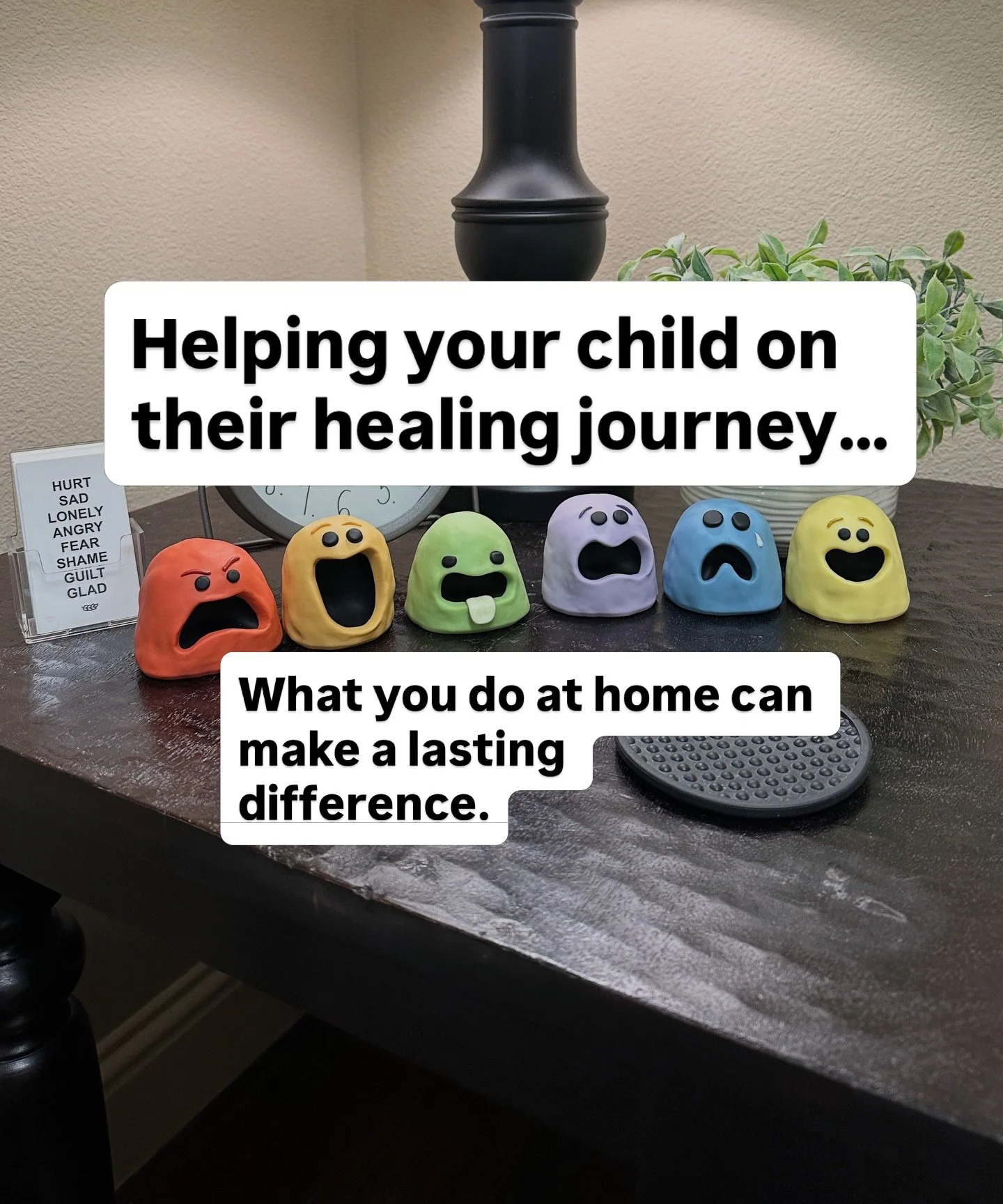
Help your child learn that all feelings are welcome, even the difficult ones. Encourage them to talk about their emotions, write in a journal, draw, pray, or express themselves through creative activities. Listening without immediately trying to solve the problem often helps children feel understood.
Build Healthy Daily Routines
Children thrive with consistency. Regular routines for meals, homework, physical activity, bedtime, and family time provide stability during stressful seasons.
Encourage Physical Activity
Exercise is one of the simplest ways to support both physical and emotional health. Whether it's organized sports, riding bikes, swimming, dancing, or playing outside, movement can improve mood, reduce stress, and increase confidence.
Prioritize Sleep
Adequate sleep plays a major role in emotional regulation, concentration, learning, and behavior. A consistent bedtime routine helps children function at their best.
Practice Good Nutrition
Nutritious meals, regular eating patterns, and proper hydration support brain function and emotional wellness. Healthy habits are easier to build when the entire family participates.
Foster Healthy Friendships
Positive friendships help children develop confidence, communication skills, and a sense of belonging. Encourage face-to-face interactions and healthy relationships with peers and trusted adults.
Make Time for Family
Some of the most meaningful moments happen during ordinary activities. Eat meals together, cook together, play games, go for walks, or simply spend time talking about each other's day. These moments strengthen your relationship and remind your child they are not alone.
Encourage Hobbies and Interests
Sports, music, art, reading, theater, church activities, and clubs help children discover their strengths while building confidence and resilience.
Practice Mindfulness and Prayer
Teaching children to slow down, be present, pray, reflect, or practice gratitude can help reduce anxiety and build emotional awareness. For families who desire it, a growing faith can provide hope and encouragement throughout the healing process.
Keep Your Home Calm and Organized
A perfectly clean house isn't the goal, but a reasonably organized environment can reduce stress and help children feel more secure.
Model Healthy Habits Yourself
Children notice far more than they hear. When they see parents taking care of themselves, communicating respectfully, apologizing when needed, managing emotions well, and asking for help when appropriate, they learn valuable life skills.
Don't Be Afraid to Seek Support
Sometimes the best way to help your child is to invest in your own growth. Parenting classes, support groups, individual counseling, or family counseling can provide practical tools and encouragement. Your child's therapist may also recommend additional resources.
Habits That Can Slow the Healing Process
Healing isn't always a straight path. There will be setbacks along the way. However, some habits can make it more difficult for children to continue moving forward.
These may include:
Staying in unhealthy friendships or relationships.
Keeping emotions bottled up instead of talking with trusted adults.
Avoiding the coping skills or strategies learned during therapy.
Withdrawing from activities they once enjoyed.
Spending excessive time on social media.
Using television, gaming, or electronics to avoid difficult emotions.
Continuing unhealthy or harmful behaviors without accountability.
Isolating themselves from supportive family members and friends.
Keeping important secrets from parents or their therapist that prevent them from getting the help they need.
Rather than expecting perfection, focus on steady progress. Every healthy choice your child makes is another step forward.
Your Presence Matters More Than Perfection
One of the greatest gifts you can give your child is simply being present.
Listen before giving advice. Ask questions instead of making assumptions. Celebrate progress, even when it's small. Let your child know they are loved—not because they have everything together, but because they are your child.
Healing is rarely a straight line. There will be good days and difficult days. Continue showing up with patience, encouragement, and hope.
At Harvest Counseling & Wellness, we believe parents are an essential part of a child's healing journey. When families and therapists work together, children have the opportunity to develop the confidence, resilience, and skills they need to thrive.
IS YOUR CHILD NEEDING TO HEAL FROM PAST HURTS OR GET OUT OF A RUT?
Harvest Counseling & Wellness is a mental health clinic specializing in Play Therapy & Teen Counseling at Harvest Counseling & Wellness (a mental health counseling practice) in Argyle, Texas. We provide therapy for children, teens and families struggling with issues related to codependency, anxiety, depression, abuse, trauma, school related issues, co-parenting issues and grief. If you are looking for Play Therapy & Adolescent Therapy in Denton or surrounding areas, contact us today for a complimentary phone consultation, 940-294-7061.